
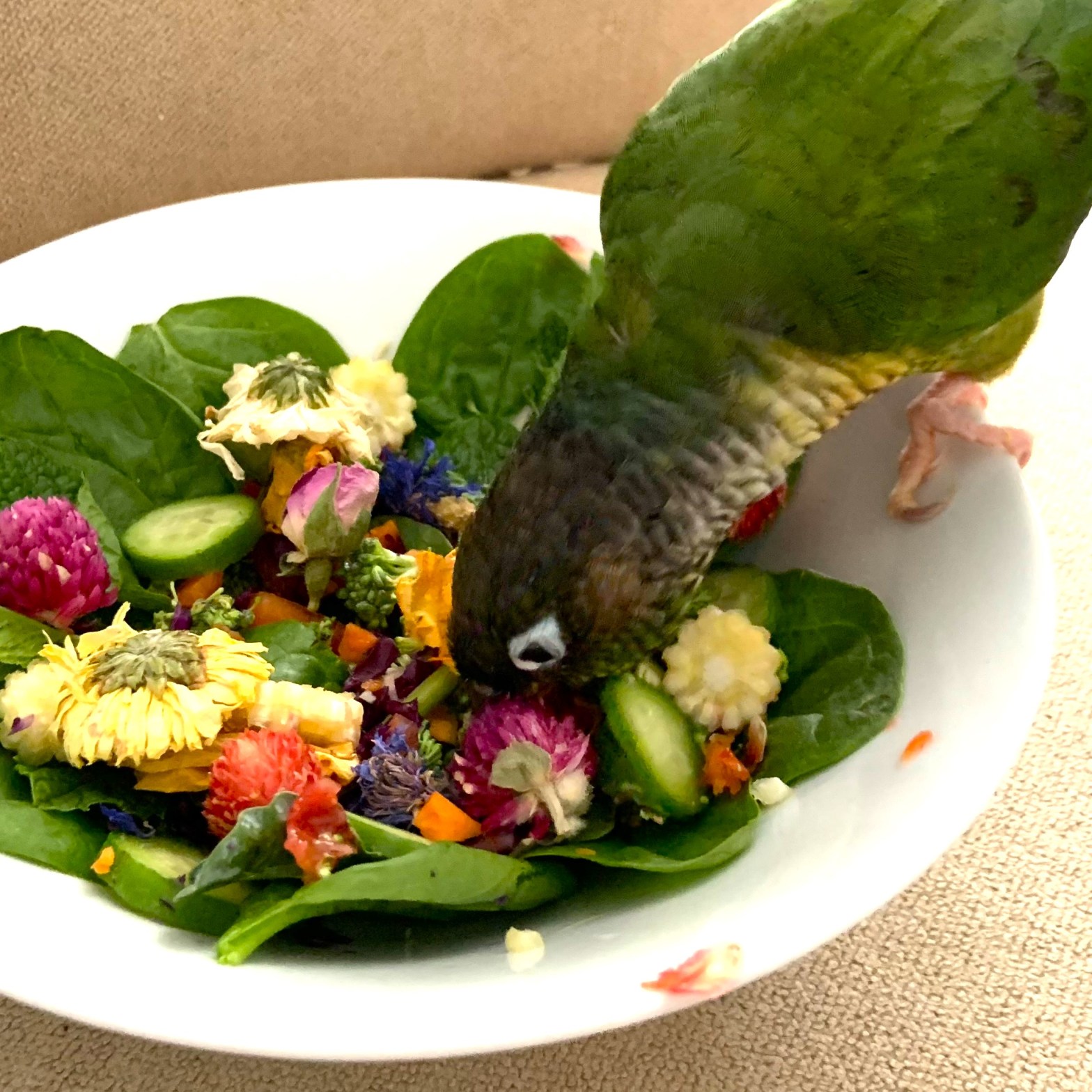
We all want our parrots to eat a healthy and nutritious diet, but the process of introducing new foods can be stressful. Here are our do’s and don’ts of getting your bird to eat vegetables:
DO take your time: Diet conversion takes a different amount of time for each bird – there’s no right or wrong amount of time for it to take! The only way you will fail on diet converting your bird is if you stop trying!
DON’T offer something once and assume your bird doesn’t like it: Parrots are prey animals, and being sceptical or cautious keeps them safe in the wild. The same approach may be taken by your bird in the home – they have no idea what this bright orange vegetable is, and they may shy away if they don’t understand that carrots are food! Some birds might not try a carrot on the first try, the 5th try, or even the 10th try! But the more you offer these new foods, and present them in different ways, the higher the chance that they will eventually give them a try. You can even make it into a game where you nibble on a carrot stick, and pretend to shoo your bird away because they ‘aren’t allowed it’ – if we know parrots, we know that if they think they aren’t allowed something, they want it more! You can even snack on bird safe veggies together from the same plate for a ‘flock foraging experience’!

DO try the same foods in different ways: When it comes to presenting vegetables to your bird, the only limit is your creativity! Think kabob skewers, chunky chop, finely grated chop, big leafy greens, or even veggie batons poked through the bars! Some things that can affect your bird’s chance of trying new foods include presentation, texture, freshness or ripeness. Check out the video at the end of this blog post for over 20 tips on how to get your bird to eat vegetables.

DON’T deny your bird food: When working on diet conversion, going ‘cold turkey’ and only offering the new food can result in some negative consequences, such as your bird not eating, weight loss and stress. We always recommend offering the new food in the morning when they are naturally hungry. If you find that they are initially hesitant to the new diet, you can offer their old food in the afternoon/evening. The key is to keep trying different techniques with the healthier foods until something works!
DO weigh your bird regularly: When transitioning your bird on to a healthy diet, it’s important to make sure they are maintaining a healthy weight and actually eating the new foods. The best time to weigh your bird is first thing in the morning – after they’ve done their big morning poop, but before you feed them breakfast. This is the most consistent way of monitoring your bird’s weight, as weighing them at random times each day may give larger fluctuations depending on what they’ve eaten and their activity levels. It’s also a good idea to feel their keel area to gauge the amount of muscle or fat in the area which will determine if their current body condition is healthy. If you don’t know what you are looking for when feeling the keel area, work with your avian vet to find out your bird’s current body condition.

DON’T give up: Diet conversion can take time, patience and the strong will of the human to not give in! Remember, if you need specific one to one help with all things diet and nutrition, we are here to help! Check out our store here for more information on our bespoke and affordable consultations: Best Behaved Birds Store.
 Best Behaved Birds